
Did you know the Soviets during World War Two, intentionally starved their dogs before unleashing them onto the battlefield? They trained anti-tank dogs rigged with explosives to seek out food from under enemy tanks with tragic results. Ultimately, the programme failed because dogs were frightened by gunfire, returning to their own trenches and self detonating near their own troops. Nowadays, in a world more ‘politically correct’ armed forces, in general, are a little more respectful of the canine. Though they still share the same dangers and camaraderie of military life of their handlers. In the US military, war dogs roles range from security detail, to explosive and drug detention, to tactical raids in active combat situations. Today, most war dogs in first world countries are able to retire without fear abandonment or enthanasia. In the US, President Bill Clinton signed in “Robby’s Law” in 2000, allowing retired military working dogs to be adopted by handlers and families.
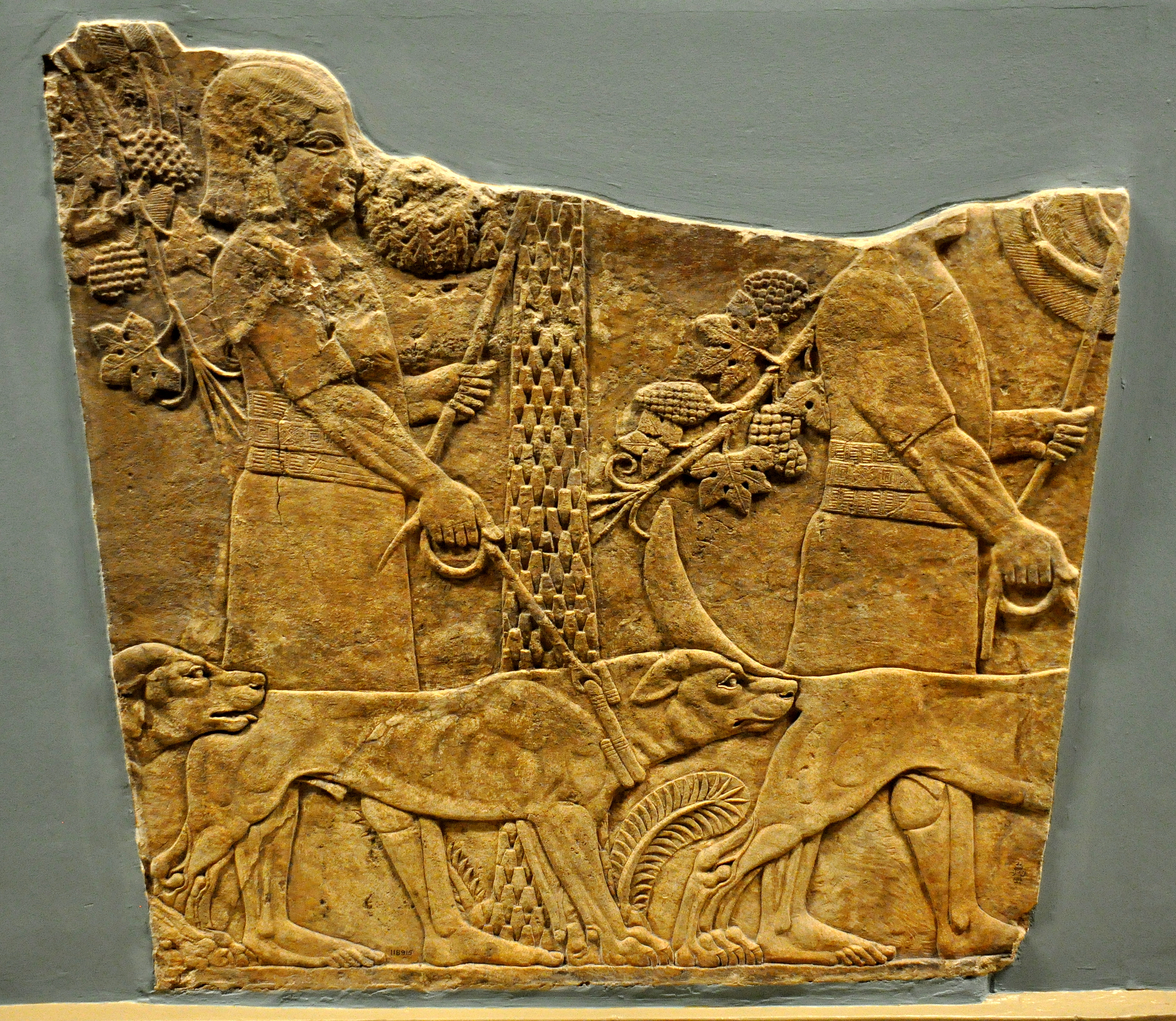
The use of dogs in war during modern times is not something new. For instance, in the ancient world the heavyset Assyrian Mastiff was trained as a combat and guard dog by the Assyrians to attack their enemy. Pictured on stone reliefs these dogs were also prized by Assyrian kings to maim or restrain big game like lions during royal hunts. In Greek and Roman armies dogs served as sentries or patrols. Ever the innovators, the Romans sometimes sent their fierce loyal canines into battle strapped with armour and spiked collars to attack and disorientate enemy formations.
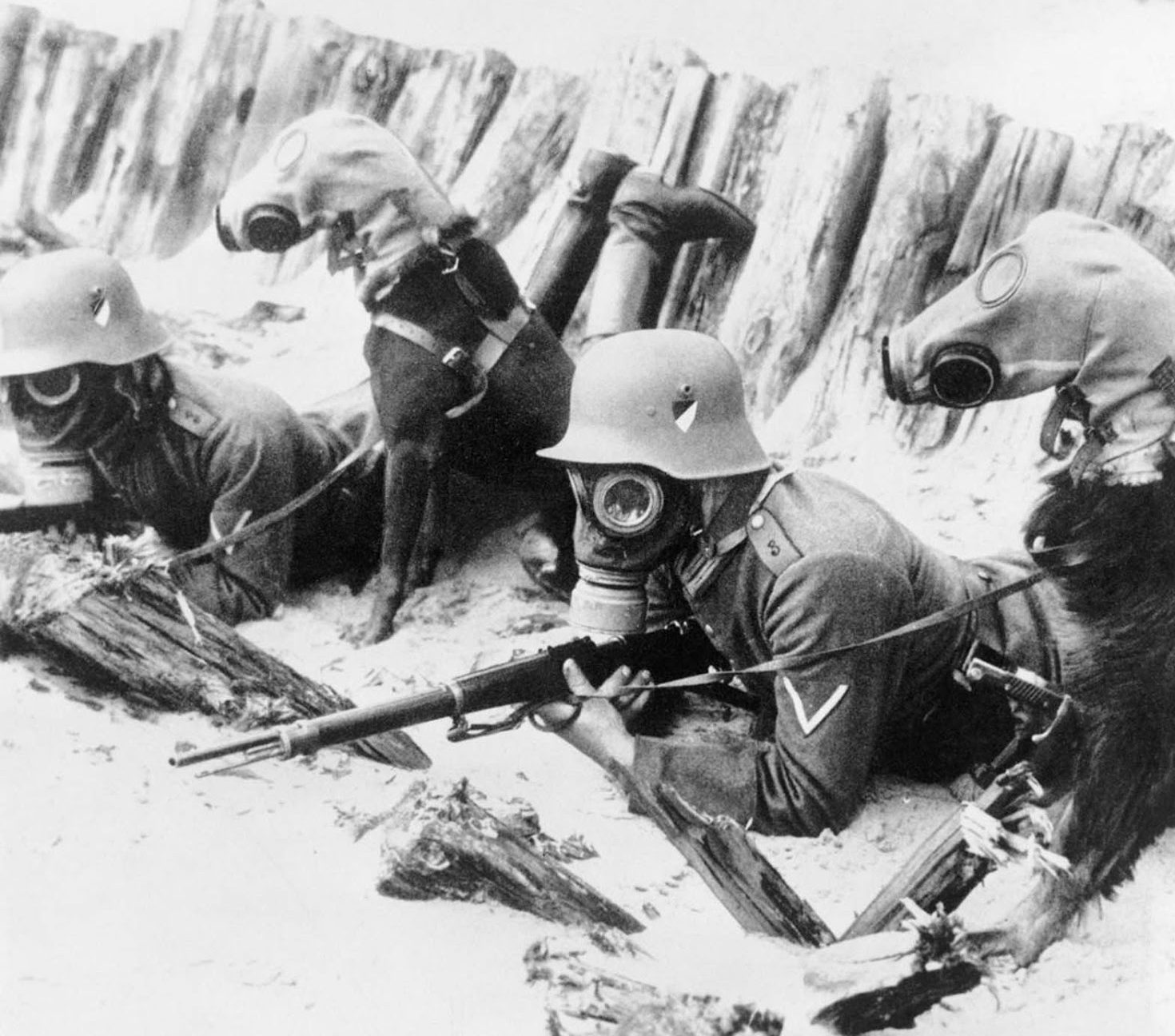
If you comb through thousands of First World War photos, you are bound to come across some of the first photographic evidence of war dogs incredibly fitted with gas masks awaiting instructions. Scenes like these played out all over the western front, where man’s ‘best friend’ served as a four-legged messenger, often jumping back and forth over trenches, as sentries and as ambulance dogs trained to find wounded soldiers. They say some 30,000 dogs served specifically with the German army on the Western Front with these types of hoods specifically manufactured for them. It makes sense since war horses and mules were also equiped with gas masks in services of the war effort.
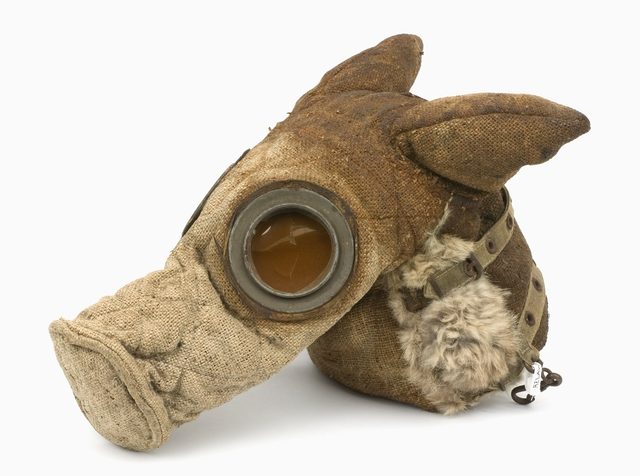
These hoods for German dogs varied in style during WW1. One of the best preserved German war dogs masks (see header image) was found by the 41st Battalion of the Australian Imperial Force in the Somme region of France, near the town off Bray in 1918. (It is currently on display at the Australian War Memorial in Canberra.) The mask was made in circa 1916 and consists of a coarsely woven paper-and-fabric blend, metal-rimmed eyepieces, rabbit-fur lining with ear pockets built into the mask’s design. Unlike soldiers masks which used filtered canisters, dog hoods relied upon chemical impregnated fabric to neutralise toxic gases.
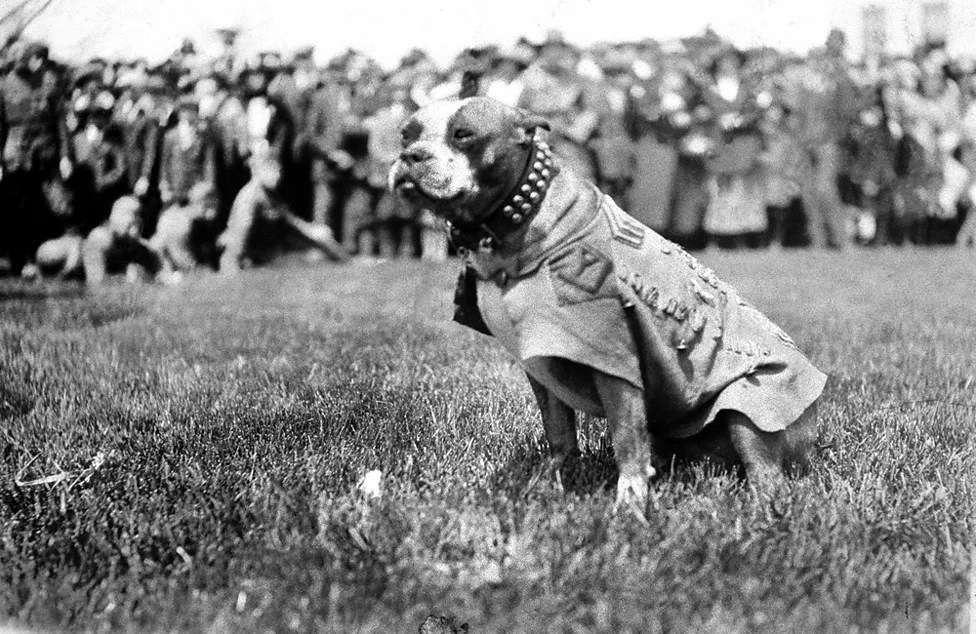
Interestingly, WW1 most decorate and famous war dog, Sergeant Stubby, a stray bull terrier who became the official mascot of the 102nd Infantry Regiment, 26th (Yankee) Division, wore a custom gas mask after surviving a mustard gas attack. For 18 months of the war, Stubby’s actions saved countless lives with his keen sense of smell by detecting incoming mustard gas and alerting sleeping soldiers by incessantly barking. Stubby’s acute hearing also allowed him to listen out for incoming artillery shells and search for injured soldiers in “no man’s land”. After the war, Stubby became a celebrity. He passed away in 1926.


0 comments on “The War Dog (a brief history of…)”