
How do you even approach the subject of The White Stripes fame and what they meant to the indie and garage rock revival of the 2000s? Or even what they meant to you? Against the odds The White Stripes conquered the world overcoming the dominant genres of the late 1990s which saw the likes of synthesisers, turntables, heavy sampling, programmed drum loops and nu-metal fused heavy metal guitar riffs rule the roost. While conventional wisdom says rock band need a full lineup, iconic bands like Nirvana, The Black Keys and The White Stripes have repeatedly proven that less is often more. Imagine stepping out on stage with a guitar and drums only. That’s what The White Stripes did their whole career. It is through these deliberate constraints and their strictly analogue rule that they kept things raw and visceral. For instance, always the innovator Jack White used what’s called a pitch-shifter pedal to simulate bass frequencies live and in the studio to enhance their sound. No need for a bass player, right? He famously employed his pedal tricks on their most famous song Seven Nation Army. I wrote about it HERE.
It’s fair to say Seven Nation Army which was taken from the bands fourth studio album Elephant (2003) is its most recognisable track. But Elephant is stacked with 14 incredible tracks from fan favourites like Black Math and Ball and Biscuit and a brilliant cover of Burt Bacharach’s I Just Don’t Know What to Do With Myself. Personally, I’m in love with Meg White’s lead vocal performance on the track In the Cold, Cold Night. But we might talk about that one at a later date.
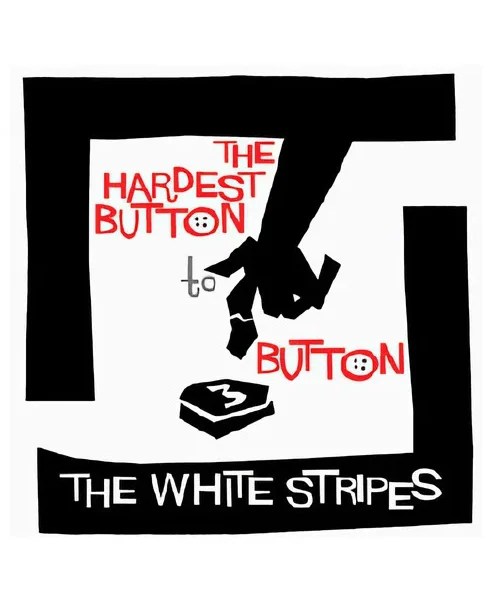
Anyway, when you are in a White Stripes mood, like I am at the moment, you usually want a song that is maybe loud, stripped-down, urgent, even punchy but definitely driven by Jack White’s innovative distorted guitar. From the album Elephant, I’m currently channeling maybe the perfect song for the occasion, The Hardest Button to Button. This track is often my go-to song on Elephant for three reason: Firstly, its stomping rhythms employed by Meg’s marching beat-like drum and Jack’s stuttering guitar riff is a great example of their less is more philosophy. Secondly, its dynamic shift from the simple threads of the opening to how it explodes in the chorus into a heavy, garage rock track is both a wonderful exercise in restraint and flashy brilliance. Thirdly, I enjoy how Jack White as a wordsmith finds emotional weight in a story about a kid growing up in the shadow of a newly arrived baby brother who commands all the family’s attention.
While Jack White didn’t come from a dysfunctional family, his fondness for revisiting childhood motifs in his songwriting is admirable. Songs like We’re Going to Be Friends, Candy Cane Children and Suzy Lee all come to mind. Jack White once said, “I like looking at things from a child’s point of view, trying to get as honest as possible…”
In The Hardest Button to Button, two great verses in the song is all we need to know what a deeply formative emotional experience it becomes for White’s fictional protagonist. Feelings of jealousy, displacement and resentment are all borne out, especially in these lyrics: “I had opinions that didn’t matter/ I had a brain that felt like pancake batter.” While its not the most uplifting of songs, it still resonates with many listeners especially those who know what its like to come from a tough or troubled home.
As for the song’s clever title White found inspiration from something closer to home: “There’s a button at the top of my navy peacoat, and it’s the hardest button to button. I thought that was a great metaphor for the off man out in the family.”
 Rearview Mirror
While I’m certainly no expert on The White Stripes, I generally dig what I’ve heard to date. “The Hardest Button To Button” is a helluva garage rocker. The video is fun to watch as well!
Yeah, they seem to have so much fun with their visuals built around their tricoloured aesthetic.
One of the coolest drummers evers. I recognize the path station and a few other locations in the video.
I love it! The heyday of the Meg & Jack partnership. Indeed, you don’t need more than two people to make rock ‘n’ roll sound great.
By the way, whatever happened to Meg after Jack ditched the stripes?
And kudos to the Frenchman Michel Gondry for this excellent video !
Meg walked away from The White Stripes choosing to live a private life away from the spotlight and music. Many observers and fans believed Meg left the band because of her acute anxiety. She was also a very shy person. When they disbanded the official statement didn’t mention anything directly about Meg’s issues, only simply that they parted ways “mostly to preserve what is beautiful and special about the band.” Looking back I think we all sensed the end was near in 2007. Their four year hiatus between 2007 and them breaking up in 2011 only prolonged what many people sensed at the time with Meg and the toll fame had on her.