
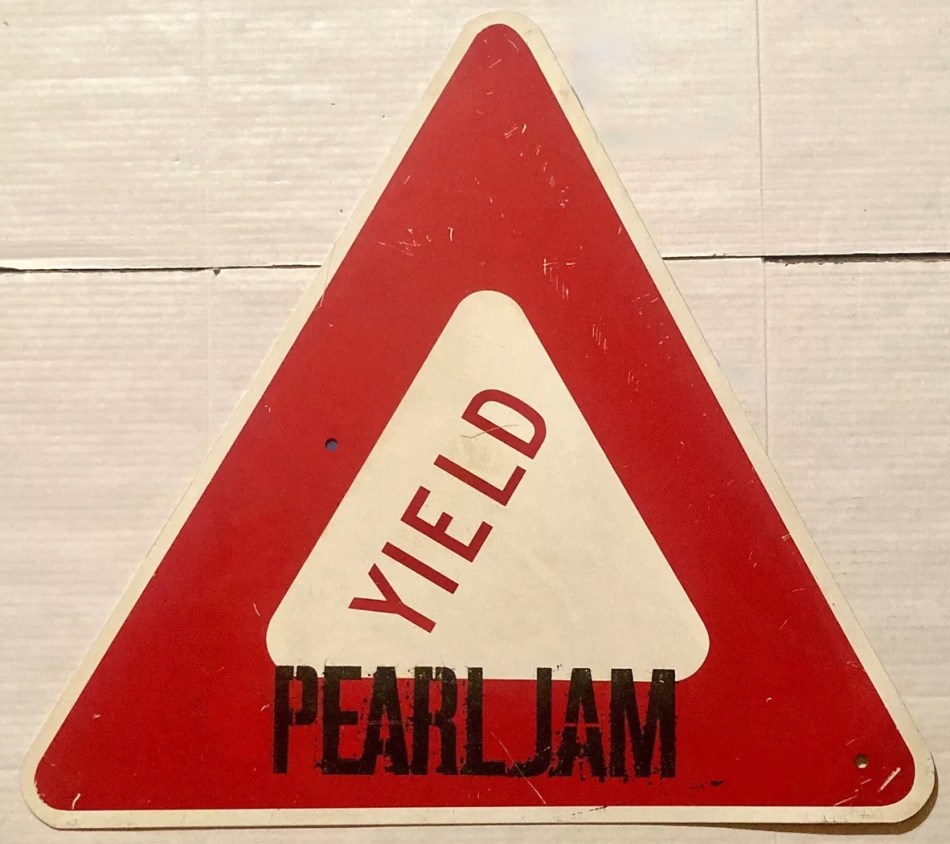
This is the third part of a 5-part series showcasing a collection of deep cut songs by Pearl Jam. You won’t find Alive, Even Flow, Jeremy, Daughter or even Better Man on this list. It’s not that list. Last time I left you, we covered the years between 1993 and 1996. Pearl Jam’s album No Code, even if it was a little chaotic, featured heavily illustrating the tide of changes that took place within the band and its sound. That said, we will take a look at one more song from that album in this latest instalment before we look at a period beginning with Yield (1998), which was characterised by an increasingly collaborative spirit within the band. Here we will continue to find some truly exciting and inspirational deep cuts. So let’s check out what I have installed for you. Enjoy!
Red Mosquito (from No Code, 1996.)
When I hear a slide guitar I usually associate it with country music. However the slide guitar has also for a long time been used to great effect in rock. From Steve Miller Band’s The Joker to Led Zeppelin’s In My Time of Dying, the world’s best guitarists have flirted with the slide guitar during different phases in their careers. On the eighth track from Pearl Jam’s fourth album, No Code, Mike McCready lets in all hang out on Red Mosquito. It’s one of his most wildest performances using Eddie Vedder’s grandfather’s Zippo lighter (rather than a bottleneck) to create a slide guitar sound. It’s certainly one of the oddest things you will hear on No Code, but one cannot help but marvel at its inherent beauty. Some say it simulates the buzzing sound a mosquito makes when you hear it swirling around your head.
“Watched from the window with a red mosquito… / I was not allowed to leave the room… / I saw the sun go down and now it’s comin’ up… / Somewhere in the time between… / I was bitten…must have been the devil… / He was just payin’ me… / A little visit a reminding me of his presence… / Lettin’ me know…he’s a waitin’ for me…”
Vedder once amusingly said the song was about being trapped in a hotel room with an insect. The song’s intro alludes to this in the opening verse. It’s plain as day, right? However, there’s a little more to it than that. The song was inspired by a horrible bout of food poisoning which saw Vedder spent time in a hospital and then holed up in a hotel room in 1995 while on tour. That said, many of us have tried and failed to interpret the lyrics of the song, in particular Vedder’s reference to being bitten by the devil. The devil could be a number of things, including food poisoning for one. In truth the lyrics are all over the place. It’s also quite possibly a song about temptation, with Vedder’s devil waiting in the wings for us to slip up, especially when we are at our weakest.
Brain of J (from Yield, 1998.)
Songs sometimes get an overhaul lyrically and Brain of J is no different with the changes it went through between the original live rendition during the No Code era and its final studio form on Yield. The earlier version of this Vedder/McCready collaboration is much angrier with its point of view. (I’ve posted the original lyrics in the comment section.) In its earliest form the listener is told to “go to hell if you don’t believe it.” Brain of J is about the disappearance of John F. Kennedy’s brain. Who stole JFK’s brain has been a mystery since 1966 when, it disappeared from the National Archives. The second verse kind of skirts around the idea of a cover up with the line “The whole world will be different then.” I’m not entirely sure what is Vedder’s angle here. I might be totally off base with its meaning too.
It’s a song that had the potential to be really controversial politically. Take for instance Bushleaguer, a song from Pearl Jam’s seventh album Riot Act (2002), which takes aim at Republican president George W. Bush. Pearl Jam were famously booed at a gig when Vedder danced around the stage with a Bush mask. It was viewed as disrespectful and unpatriotic, especially because America was at war with Iraq again. Anyway, I don’t believe Brain of J has a hidden agenda. The studio version is a little more hopeful in sentiment even though its all dressed up as a fiery McCready-led punk song. It’s one of the great album openers of Pearl Jam’s discography and sits pretty next to the likes of Once, Go and Last Exit.
In Hiding (from Yield, 1998.)
When push comes to shove, In Hiding would easily slot into my top 10 or top 15 Pearl Jam songs of all time. I think it captures their sound perfectly on Yield, built around not only a soaring chorus but Stone Gossard’s unmistakably beautiful guitar riff. I also really like Jack Iron’s drumming on this track. In truth, I believe Iron’s is brilliant on both No Code and Yield before he decided to walk away as Pearl Jam’s drummer for personal reasons. By the way, I highly recommend to anyone to watch the music documentary Single Video Theory (1998), a fascinating look at Pearl Jam during rehearsals for Yield, and how Jack Iron’s efficient easy-going style elevates the band’s performance. Moreover, there is a cool pause during rehersals which Gossard and Vedder talk about the guitar riff in In Hiding, which would go on to anchor Vedder’s introspective lyrics.
Intriguingly, Vedder’s lyrics for In Hiding were inspired by the writings of German American poet and novelist, Charles Bukowski. Thanks to Vedder’s friendship with Sean Penn, he was given a quote that Bukowski had said to Penn once. Subsequently, the song was written directly about Bukowski. Vedder once said, “Sean Penn gave me a quote that Bukowski had said to him once, and it was written directly from that. He told Sean that sometimes he just has to check out for a few days—no people, no nothing. So he goes in hiding, then he gets back and has the will to live once again. Maybe because society takes you down. For all the good things we offer each other, sometimes we beat each other down.”
Light Years (from Binaural, 2000.)
Light Years is a song that either speaks to you or it doesn’t. From “painfully beautiful” to “muted but passionate”, one cannot deny what Vedder is going for here. It’s a song about the death of a friend in which Vedder is reflecting on friendship, loss and life itself: “It don’t seem fair/ Today just disappeared.” He is also saying goodbye to his friend using astrology as a conduit to link the gulf between them: “Together but we were miles apart/ Every inch between us becomes light years now.” Later Vedder sings “Your light made us stars” giving the song a much needed boost. However, it falls short of being uplifting but it is neither completely depressing. Some find that its mid tempo groove lacks originality or excitement, something Pearl Jam usually does really well, but I strongly disagree with that notion. An excellent bridge livens up the song just when we need it. It might take a few listens to appreciate its unconventional beauty, but there is no denying that this is a worthy deep cut.
Nothing As It Seems (from Binaural, 2000.)
Nothing As It Seems was released as the first single from Pearl Jam’s sixth studio album, Binaural. It peaked at number three on the Billboard Mainstream Rock Tracks chart and did reasonably well on charts in Australia, Canada and Norway in 2000. However, it wasn’t really a major commercial success. Ask any casual fan what Pearl Jam songs come to mind at the turn of the millennium and I’ll bet they probably only remember Last Kiss. (In my country, Last Kiss topped the charts for an astonishing seven weeks on the ARIA Singles Chart.) Anyway, I think it’s safe to say Nothing As It Seems qualifies as deep cut here, where the formidable confluence of rock and psychedelia slow down time. It really is a brooding masterpiece just waiting to be introduced to an unaware audience wanting to expand their new-found appreciation for one of America’s preeminent bands.
Nothing As It Seems was one of the first songs written for the album Binaural. Jeff Ament’s fingerprints all over it, and so it should, it’s basically about his childhood growing up in Northern Montana. When he brought it to the band with full lyrics, he was determined for it to succeed. He employed but maybe begged is the right word, for Mike McCready to work his magic. The song needed a kick ass guitar part and McCready delivers in spades playing his beloved 1960 Fender Stratocastor through a Gretsch effect pedal. Together with the binaural recording techniques employed during the making of the record, Nothing As It Seems comes even more alive than one might expect. Apart from that incredibly weird buzzing sound McCready pulls off on the song, his electrifying guitar solo is a highlight you could easily listen to over and over again.
 Rearview Mirror
Here are the original lyrics of “Brain of J” which surfaced long ago on the community forum for Pearl Jam fans to decipher and analysis:
Oh who’s got the brain of J.F.K.?
pull it off and on
oh jackie o, how we feel for you now
the whole world will be different then
go to hell if you don’t believe it
oh monkey see, monkey do, play the fucking fool
oh give it all, give it back to me now
the whole world will be different then
go to hell if you don’t believe it
i get high, then you take from me, so difference aside…
the whole world will be different then
go to hell if you don’t believe it
the whole world will be fucking different then
go to fucking hell if you don’t believe it…
Nothing as it seems quickly became my favourite Pearl Jam song. Only few seem to know it over here… Good list
I’m thrilled you approve… Thanks.
These are all good choices, love the mosquito-sounding guitar of Red Mosquito.
This is another great selection – with the exception of Brain of J (which isn’t to say I don’t like it) all of these are in my favourite Pearl Jam songs list. I think this period of Pearl Jam is where they did their finest mid-tempo stuff
I enjoy pretty much everything they do, but their mid-tempo stuff is terrific. You’re absolutely spot on about this period in regards to their music. “Brain of J” is a curious inclusion for me. It’s unfocused and sentimental, but maybe that’s why I like it.