
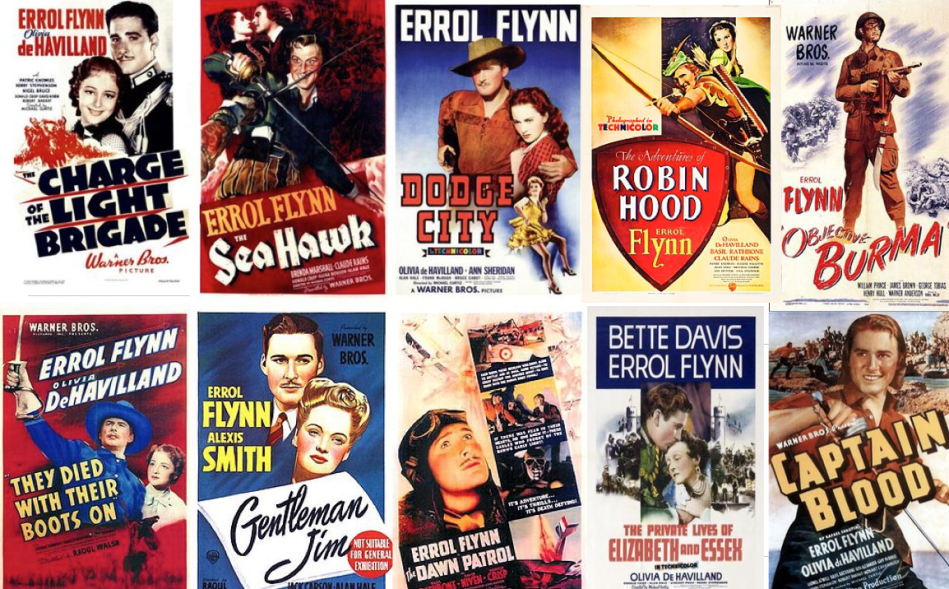
Let’s not mince words when talking about Errol Flynn. You either loved him (or loved his films) or you hated his brash smug arrogance. In today’s “cancel culture” Flynn’s toxic masculinity and love of hedonism would undoubtedly see him held in contempt or scorned, disgraced and shamed. In many ways, it’s unsettling how unapologetic Flynn was as a man. Some say he wallowed in his own ‘evil’. Yet it’s difficult to truly ignore Flynn’s contribution to film. Whatever his shortcomings as a womaniser and a notoriously difficult to work with Hollywood star, he was still a decent actor. His good looks and athleticism undoubtedly won him many roles and is evident in the range of action adventure films he made.
Overall, Flynn’s roughly 60 film career may not be as diverse as he might had hoped. The occasional romantic comedy like The Perfect Specimen (1937), or melodrama like Escape Me Never (1947) or Flynn’s solitary venture into film noir, Cry Wolf (1947), almost seemed like a waste of time. Audiences didn’t really care. What they wanted to see was Flynn as a dashing hero, especially one who was foolishly courageous and selfless. Hollywood swashbucklers, westerns and war movies all showcased his bluster and masculinity. The one director who took full advantage of Flynn’s persona the most was Michael Curtiz. They made 12 films together, even though they hated each other. Interestingly, their contempt for each other stemmed from a furor where 25 horses were killed during the making of The Charge of the Light Brigade (1936). Yet despite that one thing is clear, without Curtis tyrannical style, Flynn’s career may not have soared to the heights that it did.
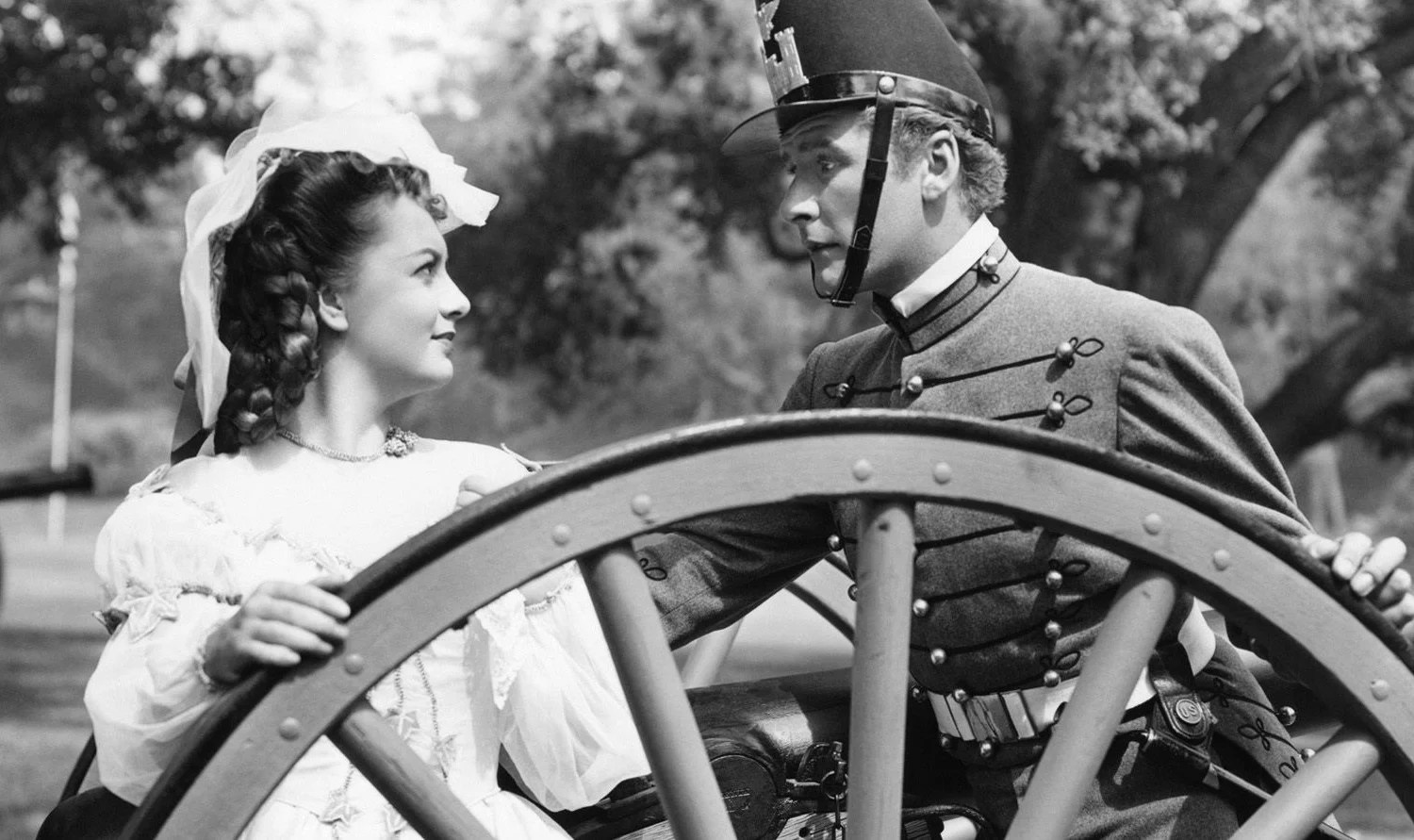
Another frequent collaborator who Flynn shared the screen with during Hollywood’s fabled Golden Age was Olivia de Havilland. Between 1935 and 1941, Flynn and de Havilland starred in eight films together. From Elizabethan England to the Old West, audiences couldn’t get enough of them. It’s fair to say they shared a special chemistry and that electricity you see between them on-screen has often been compared to that of Hollywood’s power couple Humphrey Bogart and Lauren Bacall. Of course, the Hollywood rumour mill would have a field day churning out stories of an affair between Flynn and De Havilland. But that’s not true. Interestingly, only after Flynn’s death in 1959 and in retirement did de Havilland finally admit that they shared an emotional love affair only.
While audiences didn’t know it at the time, maybe the two actors didn’t know it either, the film They Died With Their Boots On (1941) would be the last time Flynn and de Havilland would appear together on-screen. Interestingly, the tearful “farewell” scene towards the end of They Died With Their Boots On almost feels like a real life goodbye between the two, even though they are still in character.
If I am to briefly talk about one other important collaborator connected with Flynn, it is Hollywood legend Raoul Walsh, who played a major role in the middle-period of Flynn’s Hollywood career. While Walsh is arguably best known for directing The Roaring Twenties (1939), High Sierra (1940) and White Heat (1949), his time with Flynn was a period that had been one of the most successful and or satisfying of his life. They first met on the set of They Died With Their Boots On and instantly hit it off. Flynn affectionately called Walsh ‘Uncle’ and Walsh called Flynn ‘the Baron’. By all accounts they seem to lift each other up and appreciate each other for what the other brought to the filmmaking process. The two men made seven films together between late 1941 and 1948: They Died With Their Boots On (1941), Desperate Journey (1942), Gentleman Jim (1942), Northern Pursuit (1943), Uncertain Glory (1944), Objective, Burma! (1945), and Silver River (1948).
For students of cinema, film buffs and readers in general, here below is what I believe are the ten essential films that say something about Errol Flynn as an actor. I hope that you agree with my choices, but I am always happy for you to persuade me otherwise. Enjoy!
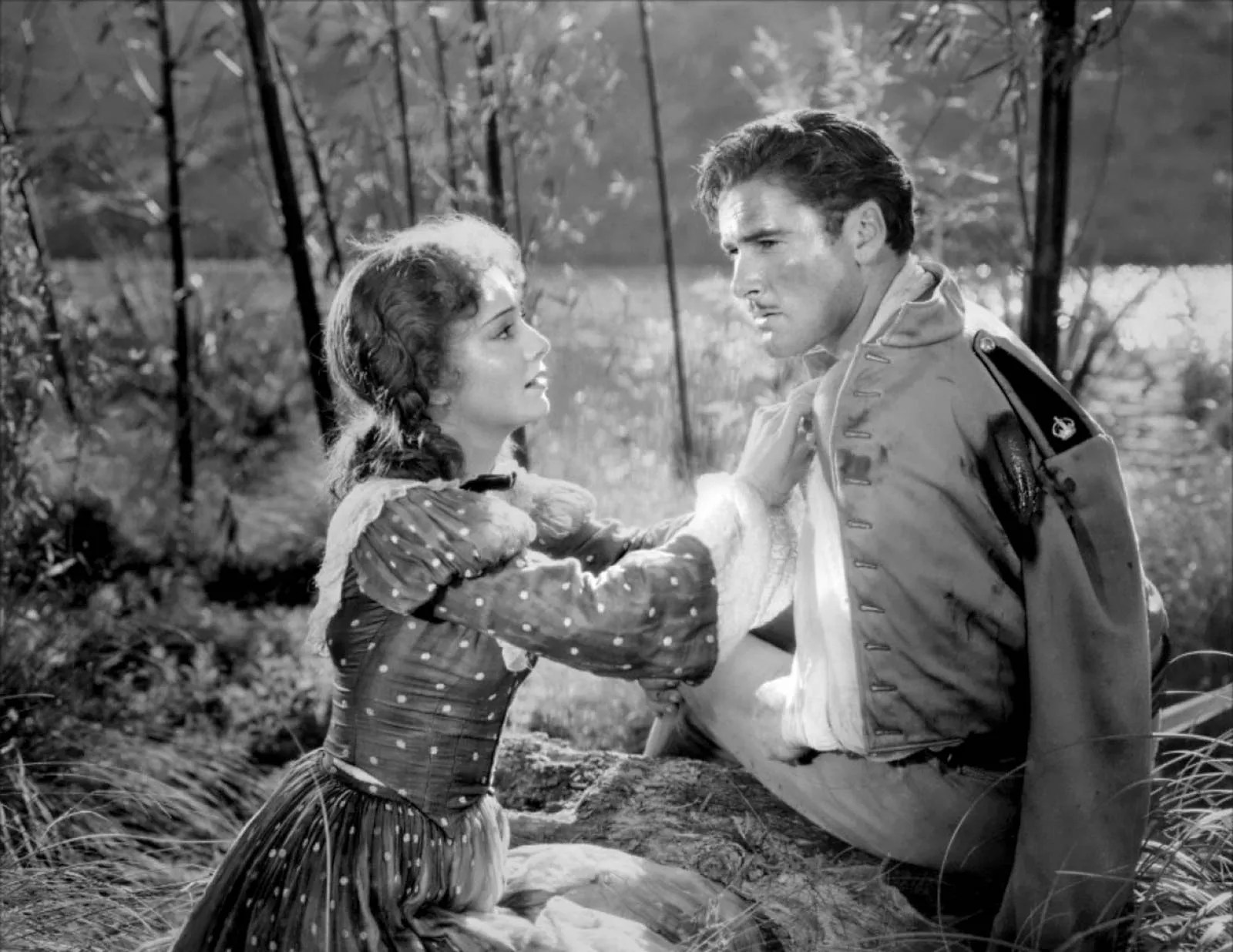
10. The Charge of the Light Brigade (1936).
Warner Bros. The Charge Of The Light Brigade (1936) was inspired by the success of Paramounts critically acclaimed Lives of a Bengal Lancer (1935). In its endeavour to replicate or even outdo Paramounts Gary Cooper led vehicle, Warner Bros spent a small fortune bringing it to the big screen. To ensure its success it hired director Michael Curtiz (who actually begged for the job) and thrust forward the rising upstart Errol Flynn into the lead role of Major Geoffrey Vickers. The story, based on Alfred, Lord Tennyson’s immortal poem, tells of two brothers (both British cavaliers) caught up in a love affair with Esla Campbell (played by Olivia De Havilland) set against a pending war with the fictitious Amir Surat Khan of Suristan. Despite Curtiz and Flynn’s hatred for each other, the film was a huge hit especially with its heart-stopping famous cavalry charge, which saw behind the scenes some of the most serious injuries and deaths to some 25 horses and their riders. At least one stuntman was killed when he fell off his horse and impaled himself onto a broken sword. On-screen The Charge Of The Light Brigade is one of only two films in which Flynn’s character dies, the other being They Died With Their Boots On.

9. Objective Burma! (1945).
Embellishing history for the sake of art is nothing new in Hollywood. Nor is it new to films starring Errol Flynn. In Raoul Walsh’s Objective, Burma! (1945), Flynn plays a fictional American Captain in charge of a mission to take back occupied Burma from Japanese Force. That in itself, isn’t the problem. The misleading lie the film producers commit is around the fact that the Americans are idolised as conquering heroes of Burma instead of a strong contingent of Allied forces led by the British. Particularly in Britain, when the film was released in 1945, it caused an uproar. Warner Bros was subsequently forced to withdrew it from the United Kingdom only after a week. In a 1952 re-release Britons finally got to see Flynn strut his stuff.
Despite all the fuss, Objective, Burma! is actually an engrossing war film. Even today, it stands up well because of Warner Bros efforts to achieve as much gritty realism as possible. The use of surplus American uniforms and equipment, even real planes all add to the authenticity you would expect for a WW2 film. Moreover, there is nothing phony about the performances on screen from the strong cast led by Flynn as Captain Nelson. Flynn once said Objective, Burma! was one of the few film of which he was actually proud of. In real life, Flynn like many actors of his generation, had aspirations of joining the war effort. But he was rejected on medical grounds due to a list of health issues including STD’s, tuberculosis and an enlarged heart. He was consequently reduced to playing a soldier on screen for the war effort.
8. The Private Lives of Elizabeth and Essex (1939).
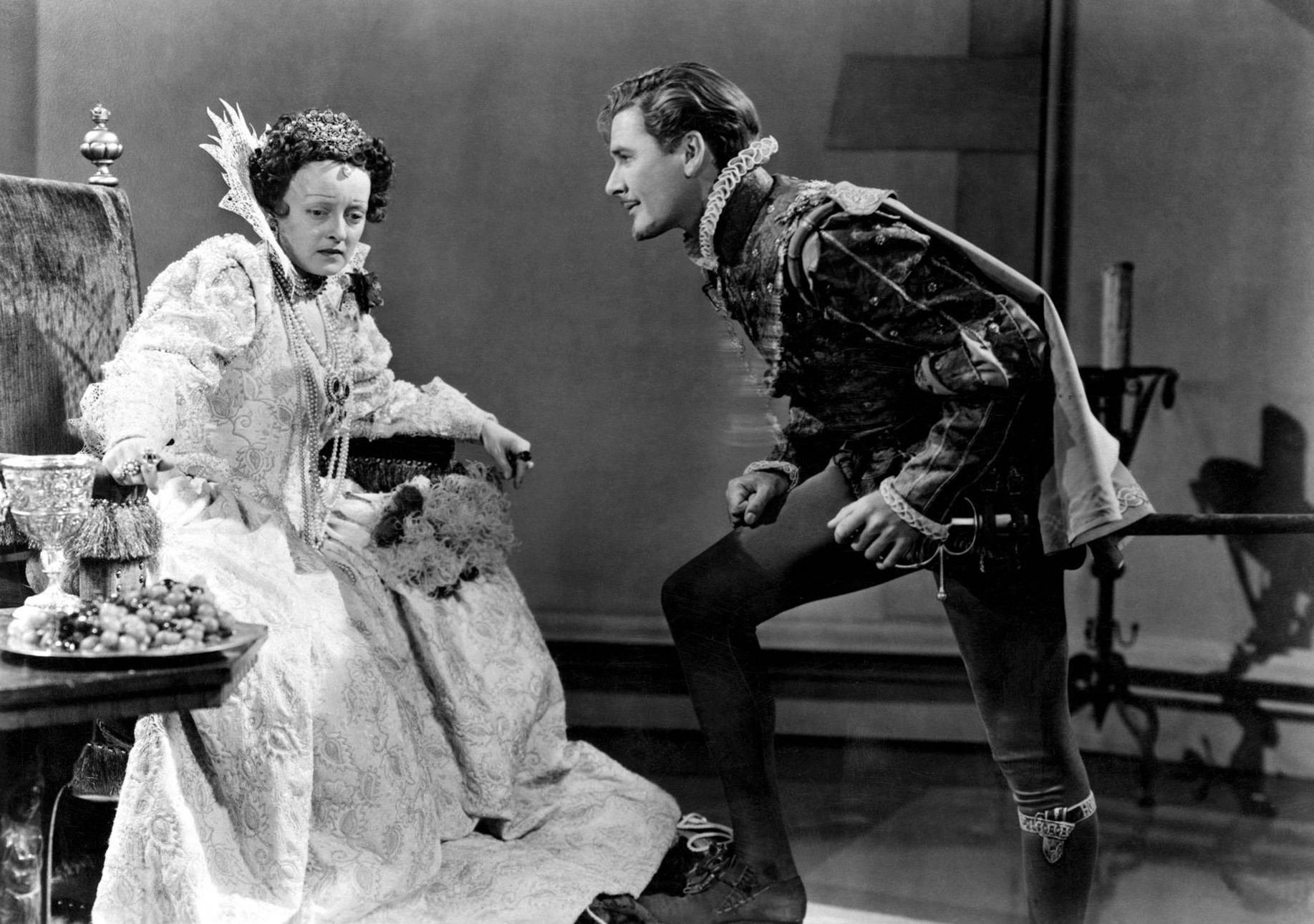
Didn’t anyone ever warn Errol Flynn at the time that an Elizabethan period costume drama about Queen Elizabeth I and the Earl of Essex just might turn out to be an out-and-out disaster? Snooze fest, paralysing bore, ponderous and self-serious are some of the awful words that have described this film. Yet somehow this Michael Curtis tale of romance and deceit in Queen Elizabeth’s court has endured criticism over the years and even Bette Davis snobby attitude towards Flynn, who was not her first choice for the role of Essex. (Lawrence Olivier was Bette’s first choice.)
There is an interestingly behind the scenes story in which Bette Davis one day famously slapped Errol Flynn pretty hard in rehearsals for an important scene in the film The Private Lives of Elizabeth and Essex. It came in the middle of a real life tussle of titanic egos. According to Flynn, the ill-timed slap didn’t go down well: “With that dainty little hand, laden with a pound of costume jewellery, right across the ear. I felt as if I was deaf.” Later on in the famous scene from the film where Davis as Elizabeth first scolds Essex and then slaps him for turning his back on her, Flynn looks like he has just relived the same indignity from rehearsals. He holds it together quite well (of course he does, he is in character!) even though he looks like he’d like to return the favour. The best line comes straight after the slap in which Flynn as Essex retorts, “I would not have taken that from the king, your father. Much less will I accept it from a king in petticoats.”
To pit one’s wits against a great actress like Davis, Flynn to his credit was savvy enough to know that he could never outshine her in the acting department. But he did his best to try and even the playing field by demanding a strategic change to the film’s title to ‘The Knight and The Lady’. Unfortunately, it was never going to happen, especially when Davis threatened to walk away from the project. It left no doubt in Flynn’s mind that the film was definitely all about Bette’s ego. At times on set she truly behaved like the final arbiter of her image. She went to extraordinary lengths preparing for the role of Elizabeth, even to the point of shaving her hairline back six inches, to recreate Elizabeth’s balding pate. Yet somehow Flynn holds his own as the dashing Earl of Essex throughout the film. Even Davis who loathed Flynn admitted as much to Olivia de Havilland in the mid-1970s after watching the film together: “Damn, he’s good. I was wrong about him all the time.”

7. The Dawn Patrol (1938).
For a short time during their friendship in the mid to late 1930s, Errol Flynn and David Niven (pictured here above) cruised Hollywood together as (dare I say it) partners in debauchery. The notorious ladykillers even shared a rented house in Malibu, California which was set up as their party headquarters.
The insufferable pair first met in 1935. The following year they starred together in The Charge of the Light Brigade. And again, in 1938’s The Dawn Patrol as Royal Flying Corps pilots fighting in WWI. However around this period their friendship turned sour because of an incident instigated by Flynn. According to Niven, who retold his life story to biographer Michael Munn, it took place not long after they had completed filming for The Dawn Patrol. To celebrate they threw a small get-together at their Malibu bachelor pad with a couple of girls. Then after they had sent the girls home, Flynn grabbed Niven “where a man doesn’t expect to be grabbed by another man.” When Niven objected to Flynn’s advances, he suddenly copped an earful from the Australian born actor. “Flynn yelled,” Niven said, “You should grow up, mate. This is Hollywood. People here are phoneys. They fuck anything that moves. What makes you so fucking different?”
It’s quite a story don’t you think? Maybe one that goes a long way to explain Flynn’s life fulfillment issues? But what does it have to do with The Dawn Patrol? Not much really, other than the fact that the chemistry once shared between Flynn and Niven as friends is mirrored on-screen.
The Dawn Patrol, a direct remake of Howard Hawks’ 1930 film of the same name, surprisingly still holds up today. Partly, because of Edmund Goulding’s honed skill as a director but also the lively performances of a strong ensemble cast. But Flynn and Niven should be singled out, especially Flynn as squadron leader Captain Courtney, who gives one of his finest performances in this late 1930s anti-war movie. That said, it’s difficult to single out Flynn’s best moments. While he can play being brash and cocky with ease – flying dare-devil missions or getting repeatedly drunk at the bar (and laughing and singing) which is right up his ally, I believe his more sombre, emotional heavy scenes win out, especially when he is fighting for his men – who are repeatedly being sent up in ill-equiped planes on suicide missions. Even more telling is his performance once he is promoted squadron commander. Here he truly comes to understand the personal agony that it is to send men to death.
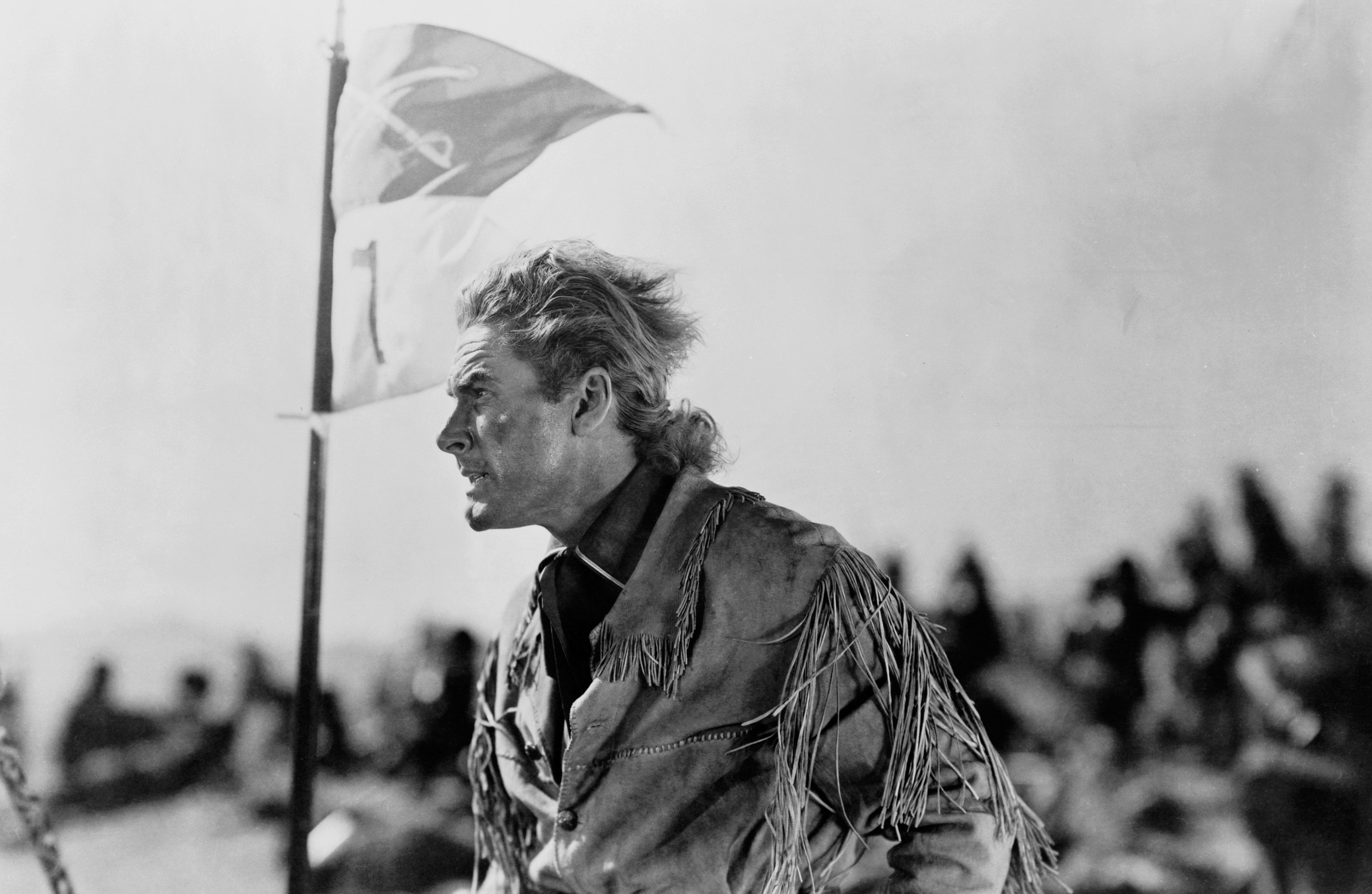
6. They Died With Their Boots On (1941).
Having the right people in your corner can be the difference between a great movie and a poor one, or a great production and an unhappy one. While Michael Curtiz turned Errol Flynn into a swashbuckling hero, they truly detested each other. So when Flynn refused to work with Curtiz on 1941’s They Died With Their Boots On, Warner Bros. was forced to replace him with Raoul Walsh. For Flynn, his strong working relationship with director Raoul Walsh, during They Died With Their Boots On would net both acclaim and mutual respect. Walsh saw something in Flynn, especially his adventurous spirit that he could relate to. To tame Flynn’s ego Walsh allowed Flynn a degree of freedom. There was no point having Flynn on a tight leash, especially because of Flynn’s ambivalence towards Hollywood. With Flynn’s reputation as a troublemaker on set, Walsh was arguably more patient than most with him. They Died With Their Boots On would go on to cement their working relationship for six other films concluding with Silver River in 1948.
But how does They Died With Their Boots On stack up as an epic western about General George Armstrong Custer’s rise and fall? Well, if you can look passed its complete whitewashing of history, Walsh manages to stage a wonderful movie with big battle scenes, romance and good humour for 140 minutes straight. Fans of Olivia de Havilland also wont be disappointed here. She’s back collaborating with Flynn as General Custer’s long-suffering wife. It is also the last time Flynn and de Havilland appeared together on-screen. I suspect that there are some of you who will disagree with me when I say that I believe that this is actually their best performance together. An argument can also definitely be made for The Adventures of Robin Hood, and I agree with you to some degree, however in They Died With Their Boots On, it feels like for the first time that de Havilland finally shares the screen with Flynn as his equal rather than just simply as as a damsel-in-distress.
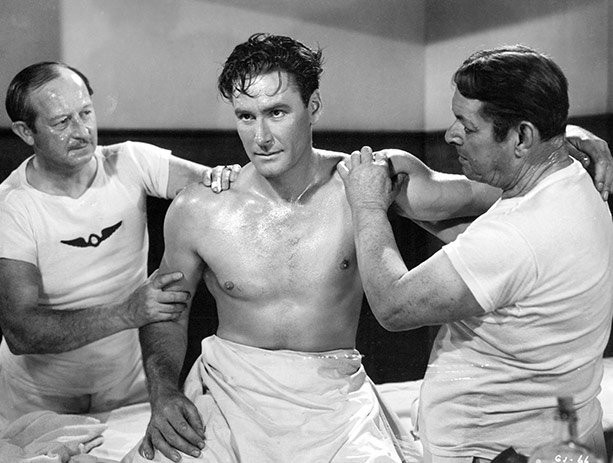
5. Gentleman Jim (1942).
It’s easy to see how Flynn was capable of giving a good performance when he believed in a movie. His commitment to Gentleman Jim, the story of the late 19th century heavyweight boxing champion, James J. Corbett (1866-1933) was second to none, as he began training for the role, sparring and boxing in the ring to acquaint himself with the rigours of the physical sport. Flynn took the role so seriously that a boxing double was rarely used during the film’s boxing sequences. To the best of his ability Flynn shows of his mastery of fancy footwork, something that Corbett pioneered in professional boxing’s infancy. Moreover Flynn certainly looked the part of a boxer with his 188cm muscular physique filling the frame. Interestingly, such were the rigours of training that, according to Flynn’s biography My Wicked, Wicked Ways, he apparently suffered a mild heart attack while making the movie.
In Richard Brody’s video essay for The New Yorker, he concludes that “Corbett seems nothing less than a precursor to Mohammad Ali.” That said, the entirety of the giant fight set pieces, whether in the streets or in indoor arenas are terrifically choreographed and directed by Raoul Walsh, with Flynn dancing around as if he was Cassius Clay aka Mohammad Ali. It’s something modern audiences today can all appreciate, knowing what we know about the man, who danced like a butterfly and strung like a bee. (In the same year when Gentleman Jim was released in 1942, Cassius Clay was born in Louisville, Kentucky.)
Gentleman Jim isn’t just a sports movie. Flynn is asked by Walsh to convey all the gentility and great subtlety and tact needed also outside of the ring, often using humour and sarcasm as a tool to advance Corbett’s story. In real life Corbett was a social climber and he had to use his head rather than his hands to often get what he wanted. It’s fair to say while the movie is loosely based on Corbett’s autobiography, Walsh has taken an array of artistic liberties here to make Gentleman Jim not only a great sports movie but an extraordinary story of Corbett’s rise.
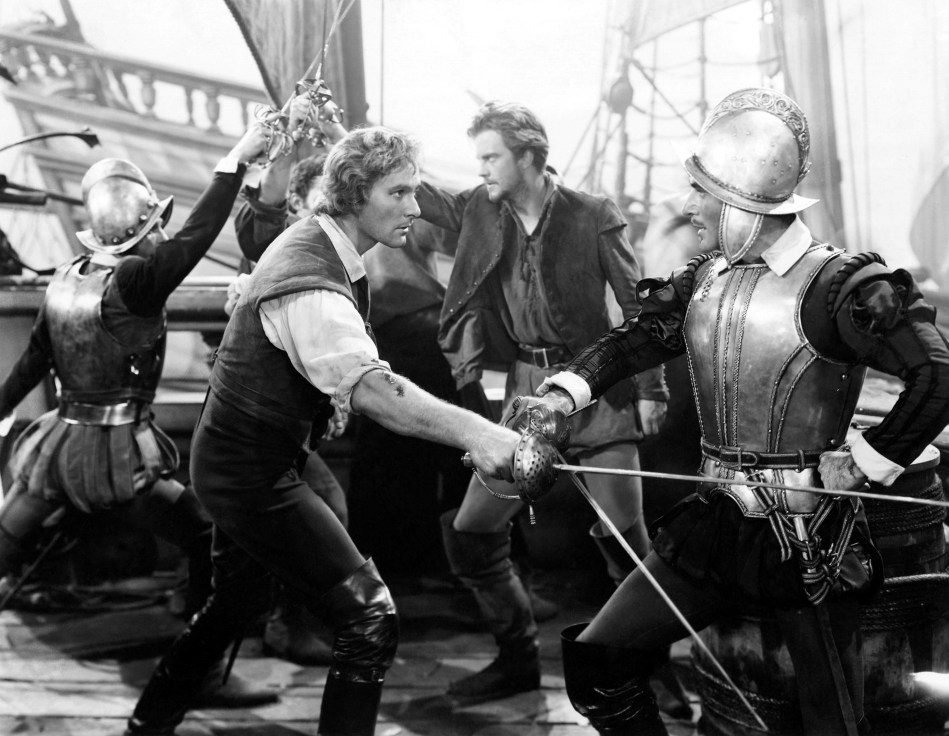
4. The Sea Hawks (1940).
Movie buffs will point out The Sea Hawk was produced in the early years of WW2 to help rally support for the defense of Britain against Hitler’s Nazi Germany. Disguised as an Elizabethan drama and adventure film, there is no denying that for example Flora Robson’s speech as Elizabeth I at the end of the film was squarely aimed at the British public. “When the ruthless ambitions of a man threaten to engulf the world, it becomes the solemn obligation of all free men to affirm that the earth belongs not to any one man, but to all men, and that freedom is the deed and title to the soil on which we exist.”
The film is intriguingly the tenth joint effort between Flynn and director Michael Curtiz. They would go on to eventually make just two more films together (12 in total). Anyway, under the watchful eye of Curtiz, we find our screen hero Errol Flynn playing Geoffrey Thorpe, a thinly veiled version of Sir Francis Drake, the man who dared go up against the might of the Spanish Armada. It’s a film that contains arguably Flynn’s best fencing sequence. He even manages to produce a wonderful acting performance which rivals his exploits as Robin Hood.
The Sea Hawk could easily play as an Errol Flynn double feature along side Captain Blood. While one has more political undertones than the other, the glue that holds these two films together is the fact that they are swashbuckling adventure movies of the highest calibre. Which is the better film is something that in my opinion is a toss of the coin. For the moment it pains me to say that honour probably goes to Captain Blood.
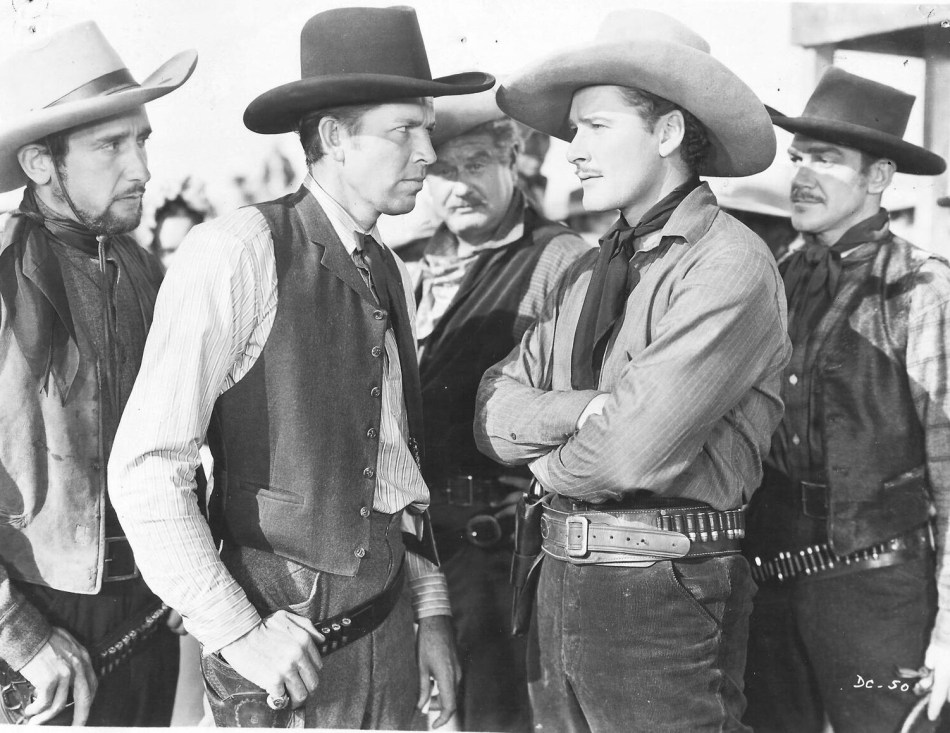
3. Dodge City (1939).
Even Flynn in his heyday was surprised that he was seriously considered for the role of a Western hero. But such was Flynn’s fame following the success of Captain Blood (1935) and The Adventures of Robin Hood (1938) that Warner Bros. and moviegoers alike were prepared to overlook his Australian/English accent. The idea that they wrote into the script that his accent was due to his character’s Irish ancestry is still comical to me. Yet despite my bemused reservation at Errol Flynn’s accent, he shows enough care and conscientiousness in his role as sheriff Wade Hatton that audiences were still willing to root for him in his pursuit of justice set against the vile lawlessness of Dodge City.
The interesting thing about Michael Curtiz’s Dodge City is that it has just about everything that you want in a Western – stampedes, gunfights, salon brawls, humour and even romance. Arguably along with John Ford’s Stagecoach (1939) it began a resurgence in ‘quality’ Western films. And although Stagecoach outshines Dodge City as the far superior Western, it certainly made up for it at the box office where it counts. Importantly, the lavish production (shot in Technicolor) and its star-studded supporting cast with Olivia de Havilland, the ever reliable Alan Dale and the villainous Bruce Cabot make Dodge City a worthy film experience.

2. Captain Blood (1935).
Can you imagine that Errol Flynn ‘the king of swashbuckler movies’ wasn’t even first choice as lead actor in Michael Curtiz’s Captain Blood. After all Flynn had only just arrived in Hollywood as an unknown but charismatic young actor. According to Flynn it was studio chief Jack Warner who had the foresight to cast Flynn as Captain Blood along side with another unknown actress at the time, Olivia De Havilland. Based on the Rafael Sabatini 1922 novel of the same name, Captain Blood is a breath-taking, swashbuckling adventure film which tells the story of an enslaved Irish doctor (Flynn) who becomes a notorious pirate after being accused as a traitor during the Monmouth Rebellion. Highlights include the exciting naval engagements, the brewing romance between Captain Peter Blood and Arabella Bishop (De Havilland) and the film’s famous sword duel between Captain Blood and the pirate named Levassuer. Interestingly, the latter begins with a fiery address, “You do not take her while I live!” to which Flynn’s Blood replies, “Then I’ll take her when you’re dead.”
In short, Captain Blood was nominated for five Academy Awards, including Best Picture. The success of film made Errol Flynn a star and it wouldn’t be the last time we saw his action-packed sword-play. An acclaimed little film by the name of The Adventures of Robin Hood (1938) would earn him further accolades as a celebrated swashbuckler and romantic hero.

1. The Adventures of Robin Hood (1938).
There’s a reason why Errol Flynn is the most famous swashbuckler of all time. It’s because of his rust-coloured suede boots and hopelessly ridiculous forest camouflage outfit he wears in The Adventures of Robin Hood. Come on let’s face it, it’s true, the razzmatazz of Michael Curtiz’s costume romp through Sherwood Forest is nothing short of absurd but somehow it still works, ticking all the boxes in this old fashioned, lighthearted, technicolour blockbuster from Warner Brothers. And while it’s not the film Curtiz is best known for (that honour goes to his 1942 film Casablanca, starring Humphrey Bogart and Ingrid Bergman), it is nonetheless his best directorial effort with Flynn.
To state the obvious, Flynn plays the role of the legendary heroic outlaw Robin Hood, who stole from the rich and gave to the poor, to a tee. In fact Flynn is so good as the titled character that no one has ever come close to emulating his charming and exhilarating performance. It is quite simply the defining role of Flynn’s career. Why? Because it is said that Flynn had a great sense of himself as an entertainer and he brought those same qualities unconsciously to his performance as Robin Hood.
If we get down to the nitty-gritty of the production, Flynn and Olivia de Havilland are perfectly cast together. Flynn is heroic and handsome and de Havilland as Maid Marion is beautiful and brave. Basil Rathbone plays the perfect villain and the rest of the supporting cast are engaging and comical. The set designs and props including the costumes are also brilliant. Moreover one might think the unusually extravagant production couldn’t get any greener, but somehow it does. (Set decorators were tasked to exaggerate colours of particular scenes to match the mood and drama of the film.) It’s so ridiculously over the top, including Eric Wolfgang Korngold’s musical score, you cannot help but smile from beginning to end. It’s as if your favourite storybook had come to life.
The film’s most daring scenes are also thrilling because almost everything you see is real. Flynn is both energetic and athletic leaping around like his Tom Cruise’s original prototype. Warner brothers even went to great lengths to hire an expert archer to shoot stuntmen wearing padding. A little extra incentive was attached to anyone brave enough to be shot in the chest. (They were paid $150 each time they were shot.) In the famous archery tournament scene where Flynn splits an arrow in two, it was actually shot by archery master Howard Hill. And if you think that scene is badass, how about the climatic showdown between Robin Hood and Guy of Gisbourne, exchanging puns and insults, all the while thrashing widely at each other with their swords. Robin even has time to be “gentlemanly”, pausing at one point when Gisbourne has dropped his sword, to kick it back to him to resume their duel. It is these qualities (and many more) that allows this film to stand the test of time. It really is the quintessential swashbuckler.
Oh, by the way, you might notice Robin Hood seemingly has an endless supply of arrows he shoots at his rivals. It’s astonishing!
 Rearview Mirror
The Adventures of Robin Hood is one of my dad’s favorite movies. I intend to finally see it next year.
Please do, it’s a lot of fun. As a kid I loved this sort of stuff. I recently rewatched it and I still can’t help but smile.
I love movies with Flynn, especially the Walsh period. I haven’t seen them all, but I remember, in addition to those in the top 10, the very beautiful “Uncertain Glory” which tells the story of a death row inmate who escapes and sacrifices himself for a noble cause. Magnificent.
Congratulations for this very relevant selection!
Is it me or did people, actors especially, from that golden age just look different? There was a softness about them, a peculiar refinement. I think it’s kinda cool.
The standards of beauty during the golden age seemed to be different say compared to the 1970s. But the golden age of Hollywood wasn’t necessarily great for women as they got older. They seemed to be aged out of movie making. Of course there will always be “beautiful” people on-screen, no matter what generation we are talking about.
A well-researched and beautifully-written post Robert. Errol Flynn was astonishingly handsome and charismatic, but his excessive hedonistic lifestyle really aged him. He looked far older than his years by the time he died at the age of 50.
Yeah, bloated and grey by the end. Charismatic, yes, but not a nice guy. The results of his autopsy and what they found are quite shocking.
Thanks for the kind words Jeff. I do put in a lot of time with features like this.
Never Say Goodbye (1946) with Eleanor Parker is a really sweet, sentimental Christmas romance. They had lovely chemistry and a strong supporting cast to back them up.
Love your list and commentary. So glad you included Essex in your list. It is overlooked and it’s a great movie with a fantastic musical score. My father was the biggest Flynn fan of all time, and he passed that on to me. I like your list, but I think The Adventures of Don Juan is missing. He is more mature, but his acting is really good, and he pulls off some of the lighthearted scenes well.
I’m thrilled you enjoyed reading my top ten list. I do agree with you, Don Juan was a role perfectly suited to his talents. I agonised over including it in my list but unfortunately it just missed the cut.