
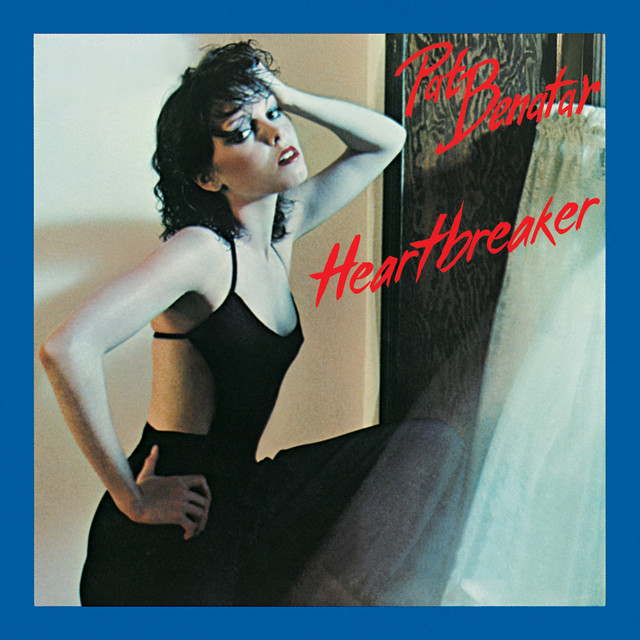
Rock goddess Pat Benatar aka Patricia Mae Andrzejewsk was born in Brooklyn, New York in 1953. She was the daughter of a beautician and sheetmetal worker, Mildred and Andrew Andrzejewsk. As a child, like her own mother (who trained as an opera singer), Benatar discovered she had a wonderful voice. After studying vocal operatic singing in her formative years, she eventually gave up entirely on education and got married to her high school sweetheart, army recruit Dennis Benatar in 1972. Around this time the couple had moved to Richmond, Virginia, close to Fort Lee where Dennis was stationed. It was in Richmond at the Coliseum during a Liza Minnelli show that Benatar’s life changed forever. “I just remember sitting in those seats and I looked around” Benatar once said. “She’s a great performer. But I remember thinking, ‘I sing better than her…. I can do this.’”
By the mid 1970s Benatar settled back in New York City with her husband in the hopes of making a name for herself as a singer. It wasn’t long after that, that Benatar got a lucky break singing in a Manhattan nightclub called Catch A Rising Star. For the rest of the decade in between appearance at Catch a Rising Star and another New York City nightclub called Tramps, Benatar spent her time honing her famous soprano in an eclectic stage act mixed with rock and show tunes.
Benatar once said she often felt like a Julie Andrews or Linda Ronstadt type in those early years, when in fact all she ever wanted to be was Robert Plant from Led Zeppelin or Lou Gramm from Foreigner. Many in her circle thought she was bonkers, maybe even a little foolish to dream so big. But the thing is that Benatar was hell bent on breaking into the mainstream. She didn’t want to be an anomaly on stage in a Manhattan nightclub forever.
In 1978 Benatar’s sold out fiery rock act and booming voice eventually got her the attention of industry insiders, primarily Chrysalis records. During this period Benatar was also in the midst of getting a divorce with her husband Dennis. Importanly she was also introduced to her future husband and guitarist Neil Giraldo, who helped shape her debut album, In the Heat of the Night (1979).
For the album Benatar leaned on a hard rock approach, relying on the likes of producers Mike Chapman and Peter Coleman and especially Neil Giraldo. Giraldo was in essence Benatar’s ace up her sleeve. She would come to rely heavily on Giraldo and his generosity and understanding of guitar rock. A task which was made easier because they shared the same vision. Moreover, Giraldo was content playing a behind the scenes role, happily pushing Benatar into the limelight. During the making of the album a lovestruck Benatar and Giraldo had to cool their heels. They would eventually get married in 1982, but only after their own relationships with their significant other was over.
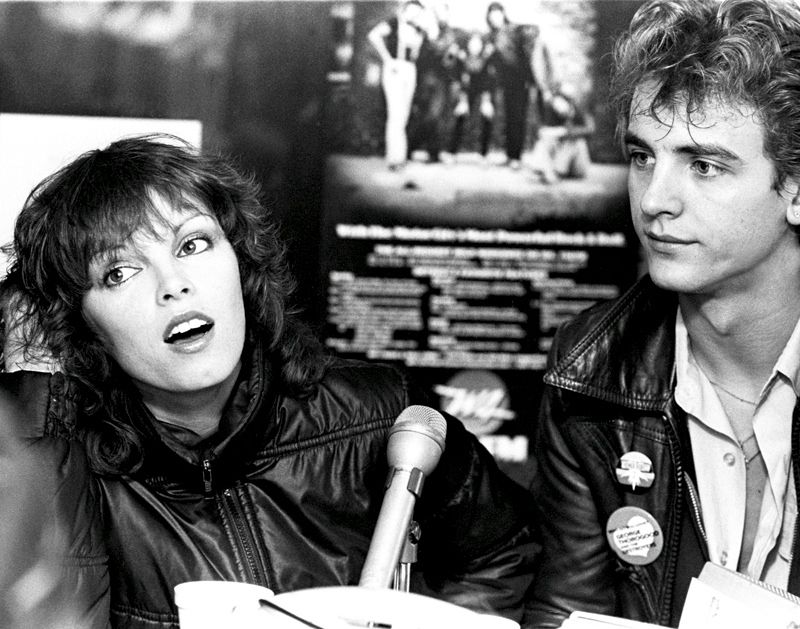
As a debut album, In The Heat of The Night has charm but arguably lacks the originality of songwriting material wholly credited to Benatar. It’s easily forgivable given the creative choices a new artist must sometimes make in establish a career and their sound. Overall, Benatar’s debut was still nonetheless a success for the twenty-six year old singer, peaking at #12 on the Billboard 200 and achieving platinum sales in the US by December of 1980. The album’s most admirable quality is without a doubt Benatar’s four-and-a-half-octave vocal range. This is no more evident than on tracks like the power ballad Don’t let It Show or the infectious feel-good, new-wave pop inspired We Live For Love. But when we talk about the album and its defining song that honour must go to Benatar’s rousing breakthrough hit Heartbreaker.
Interestingly, the song was at first ignored by Benatar’s label (Chrysalis) who opted for a cover of John Cougar Mellencamp’s I Need a Lover and Smokie’s If You Think You Know How to Love Me as the albums first two singles. After failing to make inroads into US mainstream charts with their opening salvos, the label relented to Benatar’s demands who initially wanted to introduce herself to the world with Heartbreaker and released the song as a single.
A lot like Heart’s Ann and Nancy Wilson, Benatar’s influence on female rockers cannot be overstated. Heartbreaker for instance was the template by which Benatar would establish her signature rock persona. Moreover to get there she had to make changes to the original version of the song presented by songwriters Geoff Gill and Cliff Wade from male perspective to a female character’s point of view. Benatar would go on to frequently adapt songs from a male perspective especially early on in her career because it allowed her to reframe them as female anthems of strength.
Among the most memorable and poignant lyrics of Heartbreaker, Benatar tells her manipulative, untrustworthy lover “You’re the right kind of sinner/ To release my inner fantasy/ The invincible winner/ And you know that you are born to be.” Here after a brief pause it is punctuated with a venomous “You’re a heartbreaker, dream maker/ Love taker, don’t you mess around with me.”
For the most part Heartbreaker is where the Benatar magic truly begins. In a different universe, it all could have gone wrong very quickly if not for Benatar’s insistence that the song be re-recorded after the original 1978 failed to meet her expectations. In short, Benatar said it had “no soul, no passion.” In her 2010 memoir, co-written with Patti Bale Cox, Benatar recalls how “I heard it in my head but I couldn’t get anybody to play what I was hearing…. And the minute [Neil Giraldo] walked in, he knew exactly what I was talking about. He played it exactly the way I wanted it – and the whole thing was born from that.”
It’s true if you listen to the original version it’s not all that different from the official release. But Giraldo somehow still manages to elevate the song’s intensity through his lively blistering guitar work. It meant Benatar too, had to step up her game with an emphatic new vocal performance to match the energy of her new muse. One of the song’s highlights comes just after the midway point as Benatar’s voice wails with intensity. Straight after this the music just stops and we are treated to an isolated multi-tracked vocal solo by Benatar. With all the poise and control of a veteran Benatar lights up this song like no other.
Heartbreaker would send Benatar on a career trajectory of many highs and lows accumulating in her induction into the Rock ’n’ Roll Hall of Fame as part of the class of 2022. But before we skip ahead and reflect on her lasting legacy, it’s worth noting that between 1980 and 1988 Benatar was an unstoppable force, arguably eclipsed only by Madonna. That said, her journey from obscurity to icon is worth telling. Interestingly what followed Heartbreaker were songs like You Better Run and Treat Me Right, both taken from her follow up Crimes of Passion (1980), as wonderful examples of Benatar’s “get out of my face” stance. Often songs like these were in response to her label trying to objectify her.
Please join me next time as we look back at Benatar’s 1980 sophomore album Crimes of Passion which many still believe to be the crown jewel of her back catalogue.
 Rearview Mirror
Great voice. BUT. Her songs had some of the worst lyrics in rock music IMHO.
I loved her blues album “True Love” ~ I had it on cassette & I wore that tape out.
Maybe some of it is simplistic or cliched in nature of what was expected or typical of 80s rock. Don’t forget she didn’t write a lot of the songs that appeared on her albums in the early years which were cover versions. Admittedly there are some howlers like ‘Shadows of the Night’. For the record I love Benatar, so maybe I’m a little biased.
Love Pat Benatar. My favorite songs of hers are “Hit Me With Your Best Shot”, “Love is a Battlefield” and “We Belong”.
While ‘Love is a Battlefield’ and ‘We Belong’ are both products of the 80s, they are still today pretty awesome. The melody’s are very catchy. The appeal of the choruses make them very singalong, especially in the car when I’m on my own 😉
Such a total rockstar and she had to put up with so much sexism and misogyny before the people back her realised why people liked her.
I couldn’t agree more Steve! I’m hoping to cover some of sexist attitudes she encountered along the way in the series I’m planning to write on her. Indeed the sexism was right there from the start. In promoting her follow up ‘Crimes of Passion’ (1980), her record label airbrushed a hyper-sexualised photo of her. To say the least Benatar’s was angry and embarrassed. Stay tuned.
Probably my favourite Benatar hit, nice and tough.