
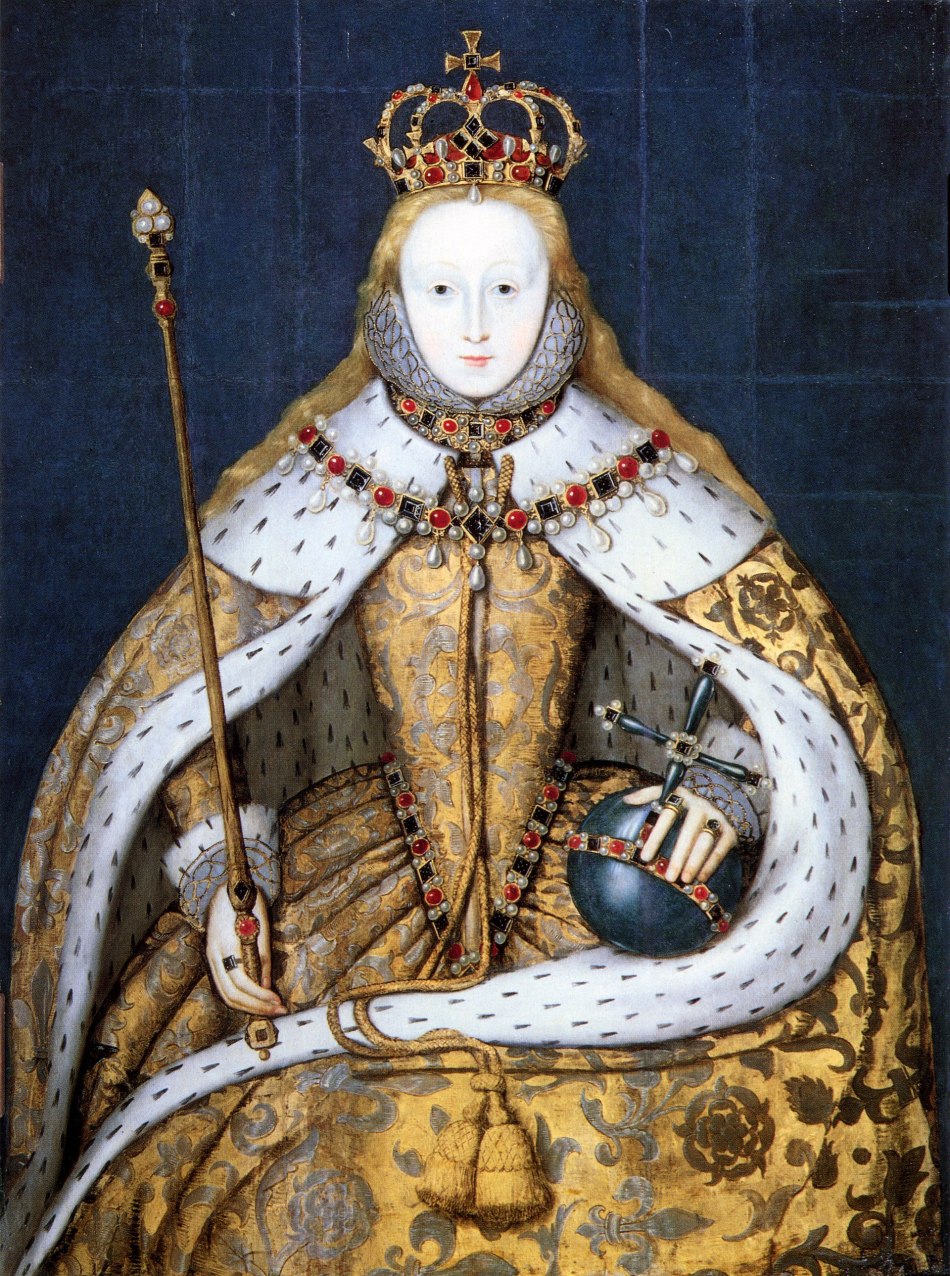
One of the most famous images of Queen Elizabeth I is ‘The Coronation portrait’, which is held at the National Portrait Gallery in London. It shows the Queen crowned, wearing a gold robe, while holding the orb and sceptre, symbols of her authority. While it is striking and regal and truly befitting for a monarch of her standing, it wasn’t always the case.
Elizabeth’s rise to the throne of England may be likened to a roller coaster ride with its emotional highs and lows. In 1533, at birth, she was the presumptive heiress to the throne, only to be pushed aside and declared illegitimate through political maneuvering by her father Henry VIII, during his turbulent reign as King of England. He would timely reverse his decision in 1544, but still upon his death the line of succession would bypass both Elizabeth and her half-sister, Mary, in favour of their younger half brother Edward VI.
Good fortune, it seems did not smile kindly upon Elizabeth or Mary. During Edward’s reign, under the influence of a regency council, the young King Edward would pass over both his sisters long-held claims to the throne, controversially in favour of his first cousin once removed, Lady Jane Grey. The succession plan, thwart with problems, immediately ignited a crisis, especially upon Edward’s death, when Lady Grey tried to legitimize her claim to be Queen. But in a rare show of solidarity, Henry VIII’s daughters struck back organizing themselves at the head of a large army and rode into London to reclaim what they believed was their sovereign right. The populist Mary, ahead of her sister, Elizabeth was declared Queen of England.
England was a dangerous place for Protestants, especially for the protestant Elizabeth, under Queen Mary, a devote Catholic. Mary saw fit to impose her pro-Catholic dogma throughout the kingdom and even made efforts to restore papal rule again in England. She also went to great lengths to victimize and prosecute Protestants in her realm. (Mary would earn the nickname “Bloody Mary” for her efforts.) Mary even imprisoned Elizabeth briefly in the Tower of London in 1554, in the same tower Elizabeth’s mother Anne Boleyn had spent her last horrible days as a prisoner, before being beheaded on the orders of Henry VIII. With this in mind Elizabeth had good reason to fear her mother’s fate.
Elizabeth’s tower imprisonment came as a direct response to the Protestant rebellion that took place during Mary’s reign. Some people believe it was a desperate act. Fortunately, Mary’s prosecutions would largely fail, including her attempt to punish her sister for treason. Elizabeth would be mercifully released after no evidence of a conspiracy could be proved.
During the last months of Mary’s reign, it became clear that she was mortally ill. Her parliament urged her to name her sister, Elizabeth as heir apparent. She reluctantly agreed and approved the succession of Elizabeth. A condition of Elizabeth’s succession was that she had to promise of that she wouldn’t change Mary’s Catholic reforms and legislation. Of course, Elizabeth secretly had no intentions of following through with her promises and upon Mary’s death reversed all her sister’s Catholic policies.
After Mary’s death, and as if she had not suffered enough indignity, Elizabeth would survive a brief Catholic plot against her, before a largely Protestant English parliament would finally call Elizabeth to take her place as ‘queen of this realm’. On the eve of her coronation Elizabeth to the Lord Mayor and the people of London said: “I will be as good unto you as ever a queen was unto her people.” And with those timely words Elizabeth I, in her coronation robes, patterned with Tudor roses and trimmed with ermine, become Queen of England, at the age of 25, in Westminster Abbey, London, on 15th January 1559.
 Rearview Mirror
Informative Robert. I watched “Anne of a Thousand Days” again recently. What an amazing world the royals made during those times. The battle of religion and rule played such an important role.
In Mike Duncan’s Revolutions podcast, they insinuated that she left the country in a dire financial situation. I’d never heard that. You usually get a single narrative on historical figures from such a distant time, but if you dig deeper…